The 3 a.m. · comparison
Rayon from Bamboo vs Cotton vs Cold-Touch Nylon: How to Compare
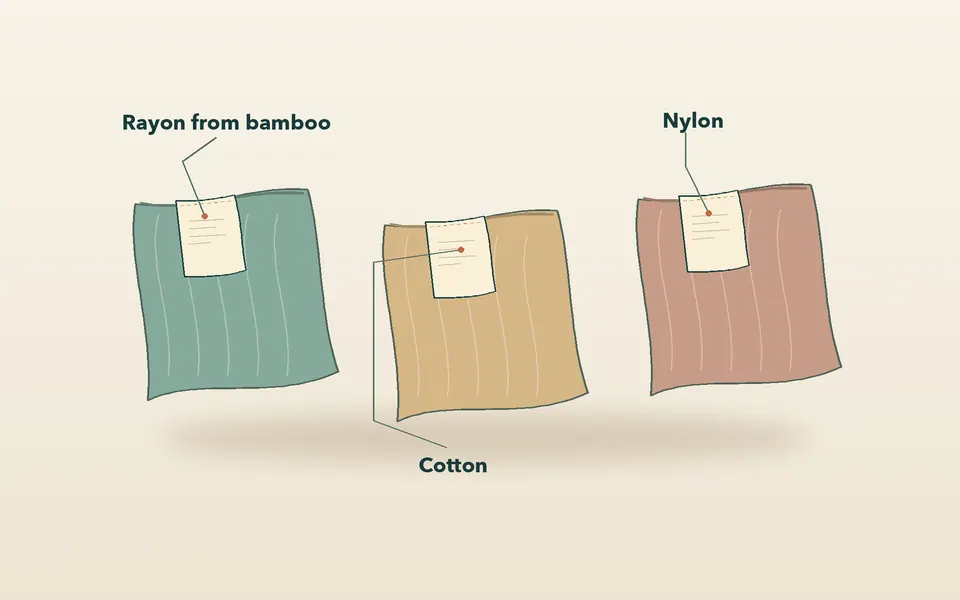
There is no useful winner among these three labels without knowing which garments or pillowcases you are comparing. “Cotton” names a fiber. “Rayon made from bamboo” names a manufactured fiber and its stated source. “Cold-touch nylon” combines a fiber name with a performance description. They are not three equivalent scores on a cooling scale.
Use the label to identify what you are buying, then compare the finished item against the job you need it to do.
Start with the fiber label
For products sold in the United States, the FTC explains the distinction between rayon and its plant source. A manufactured rayon textile should use its proper fiber name. When the source is substantiated, “rayon made from bamboo” is an appropriate description. Naming the plant is not required simply because the material is rayon.
That distinction matters when comparing a product description with its fiber-content label. If they seem inconsistent, ask the seller to clarify before buying. A botanical story cannot stand in for the percentages of the fibers in the finished item.
| Label you encounter | What to check next | What not to infer from the name |
|---|---|---|
| Rayon made from bamboo | The complete blend, fabric construction and care instructions | That the plant source establishes sleep comfort |
| Cotton | Whether the item is entirely cotton or a blend, its construction and fit | That every cotton garment will feel or dry alike |
| Cold-touch nylon | The complete blend, the claimed cooling property and relevant test evidence | That all nylon fabrics have the same contact feel or duration |
If you already know you dislike a particular texture, use that preference to narrow the search. Do not assume every item carrying the same fiber name has that texture.
Compare the complete fabric
AATCC’s liquid-moisture-management method considers the fabric’s structure as well as properties of its fibers and yarns. That gives a reason to ask about the actual material being sold, instead of predicting its behavior from one ingredient.
Check whether you are comparing a loose T-shirt with fitted pajamas, a brushed surface with a smooth one, or a light case with a padded cover. These are visibly different products before a cooling claim enters the comparison. Weight, knit or weave information may help describe them, but none is a personal-comfort verdict by itself.
For moisture questions, ask for a result for the relevant finished fabric. For first-touch cooling, ask which method measured that property. Do not rank two numbers if you cannot establish that the methods and conditions are comparable.
Choose for the job you actually have
For pajamas you need to change at night: compare openings, waistband adjustment and whether you can remove the garment comfortably. A material you like is still a poor match if the cut makes changing awkward.
For a pillowcase: check the surface you will lie on, dimensions and closure. Keep the pillow and usual protective layers in mind. Our pillowcase-versus-pillow guide separates that surface decision from replacing the pillow itself.
For a small wardrobe or travel bag: make care a deciding factor. Read the item’s washing and drying instructions and consider the facilities available to you. Do not assume a fiber name means that machine drying is allowed or that an item will be ready by a particular hour.
Make a shortlist without starting over
Choose two real items, then write down their full composition, dimensions, care method, relevant evidence and return terms. Mark missing information as unknown. This is more useful than assigning an automatic first, second and third place to the fibers.
If your current clothing is comfortable and manageable to wash, keep it in the comparison. You can also change just one item rather than replacing a whole set. For interpreting performance claims on a shortlisted garment, see do cooling pajamas actually work?.
Questions and answers
Does rayon made from bamboo mean the fabric is unprocessed bamboo?
No. It identifies rayon and its stated plant source. FTC guidance distinguishes that manufactured fiber from material made directly from the plant. The plant name alone does not establish cooling performance.
Must a rayon label name the plant used to make it?
FTC guidance allows the generic fiber name rayon. If a seller also claims bamboo as the source, that claim needs support; rayon made from bamboo is an appropriate description when accurate.
Is cotton always the worst option for a warm sleeper?
This guide does not support that ranking. Compare the actual garment's construction, fit, feel and care needs. If a cotton garment already suits you, its fiber name is not a reason by itself to replace it.
Does cold-touch nylon tell me how long a fabric will feel cool?
No. Ask what the claim refers to and whether the seller has relevant test results. A fiber description and a contact-cooling result do not establish a duration for use in bed.