Moving · trust gap
How Do Cooling Towels Work? Water, Humidity and Practical Limits
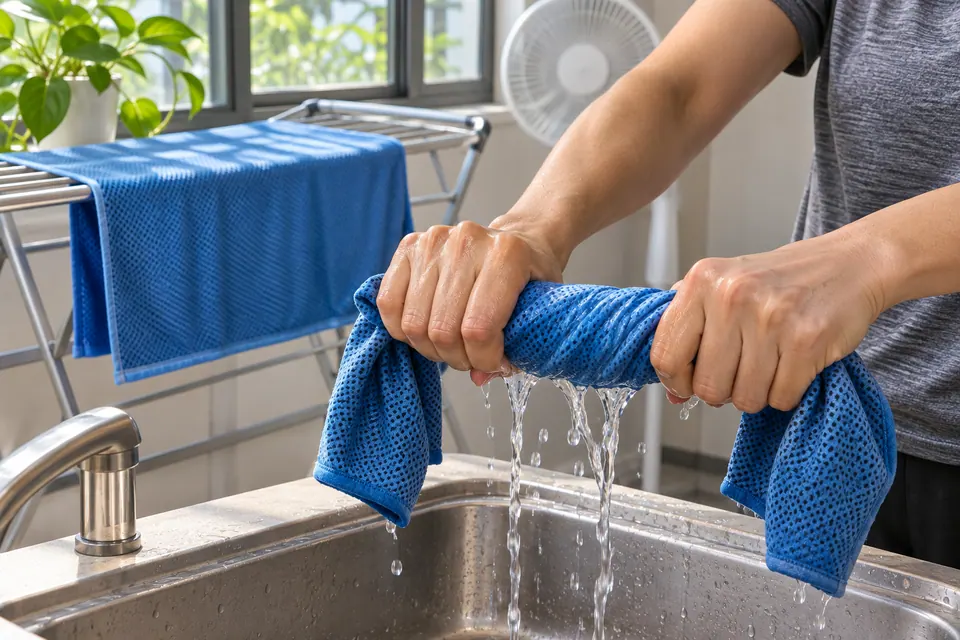
An evaporative cooling towel works through water evaporating from damp fabric: the water takes up heat as it changes to vapour. The National Weather Service explains this with a wet cloth around a thermometer. Moisture is necessary for this process; a dry towel cannot provide the same evaporation.
That mechanism does not prove a particular towel will make you feel cooler, by how much or for how long. The decision is whether a damp cloth is comfortable and manageable in the place you plan to use it. This guide covers towels wetted for evaporation; dry cool-touch fabrics and products with chilled inserts need their own instructions and evidence.
Check whether it is dry, wet or simply unsuitable for the setting
| What you find | What to do next |
|---|---|
| The evaporative towel is dry | Check the manufacturer’s wetting and wringing instructions before using it; do not infer activation steps from the word “cooling” |
| It is wet but feels unpleasant or is not useful to you | Remove it; adding more water is not an answer to every comfort problem |
| The surrounding air is humid | Expect evaporation to differ from a drier setting; keep access to a cooler place in your plan |
| You cannot manage water, drips or the used towel | Choose another comfort arrangement for this outing, rather than packing an item you cannot conveniently use |
The National Weather Service’s heat guidance explains that high humidity reduces evaporation. This is a physical limitation, not a precise humidity cutoff for every towel. A towel can remain wet without giving the sensation you wanted. This guide has no measurements that would support a universal cooling duration or a temperature-drop claim.
Plan around the place, not just the product label
A short walk with water available involves different practical needs from an office conversation in a dry shirt. Before taking a towel, answer these questions:
- Water: Where can you wet or rewet it according to its instructions?
- Contact: Are you comfortable with damp fabric against your skin or clothing in this setting?
- Carrying: Where will the used towel go without wetting a bag, documents or electronics?
- Afterwards: When can you follow the item’s cleaning, drying and storage directions?
A bag or container for the journey only solves transport. It does not replace the care instructions, and different towel materials may have different requirements. Use the cooling towel washing and travel-care checklist to separate washing, temporary wet carrying and storage instructions for your exact item. If water or laundry access is uncertain on a longer trip, resolve that before relying on the towel. The travel packing guide helps you check the facilities you will actually have.
Compare an ordinary cloth with a specialist towel
An ordinary clean damp cloth lets you see whether you like managing wet fabric before buying a specialist item. It does not establish the performance of a different towel. For a particular product, compare evidence you can actually check:
| Your requirement | What to verify for the specific item |
|---|---|
| A manageable size and feel | Listed dimensions and material, plus whether you already know that texture suits you |
| Practical wetting and care | The manufacturer’s directions, including wringing, washing and storage |
| A useful carrying format | What is included, and whether it fits your intended wet-transport plan |
| A claimed cooling advantage | Which products were compared, under what conditions, and what was measured |
Water retained, surface temperature and a person’s comfort are different outcomes. A material name such as PVA or microfiber is not itself a comparative test. If a listing lacks the relevant measurements, keep its cooling advantage unknown rather than filling the gap with a material-based ranking.
Rehearse the practical steps in an ordinary comfortable setting
Before an outing, try the wetting, handling and packing steps at home or another convenient place. Notice whether you like the damp feel, whether it drips where you plan to wear it, and whether you can put it away and care for it as directed. Remove it if it is uncomfortable. This is a personal check of convenience, not a heat-exposure experiment or a clinical test.
There is no need to wait for a very hot day to discover that a wet collar bothers you or the carrying pouch does not fit your bag. Nor does a successful rehearsal establish how long the towel will feel pleasant in different weather.
Keep heat illness separate from comfort
A cool-feeling patch of fabric does not show that continued activity in heat is safe. If heat makes you dizzy or unwell, stop and move somewhere cool. Confusion, a seizure or loss of consciousness calls for emergency help. The NHS heat-exhaustion and heatstroke guidance explains when to seek help. A towel should not be your basis for deciding whether to stay in heat.
Questions and answers
How does an evaporative cooling towel work?
Water takes up heat as it evaporates from damp fabric. The towel needs moisture for that process. This explains the mechanism, but does not establish a fixed temperature drop, cooling duration or benefit for a particular person.
Will a dry cooling towel work the same way?
A dry towel has no moisture to evaporate. Follow the item's wetting and wringing instructions if it is an evaporative towel. A dry cool-touch fabric or a chilled insert uses a different product claim and needs its own evidence.
Why can a towel stay wet without feeling as cooling as expected?
Humidity affects evaporation, and being wet is not a measure of comfort. Higher humidity slows evaporation under otherwise comparable conditions. Do not assume adding more water will fix an uncomfortable setting or make continued heat exposure safe.
Is a specialist cooling towel better than an ordinary damp cloth?
Wet cloth can also support evaporation. A specialist product may have a format or care requirements that suit you, but a cooling label alone does not prove better or longer cooling. Compare the actual item, instructions and any relevant test conditions.