Out the Door · process
Will Your Lunch Container Fit a Cooler Bag? Measure the Packed Stack
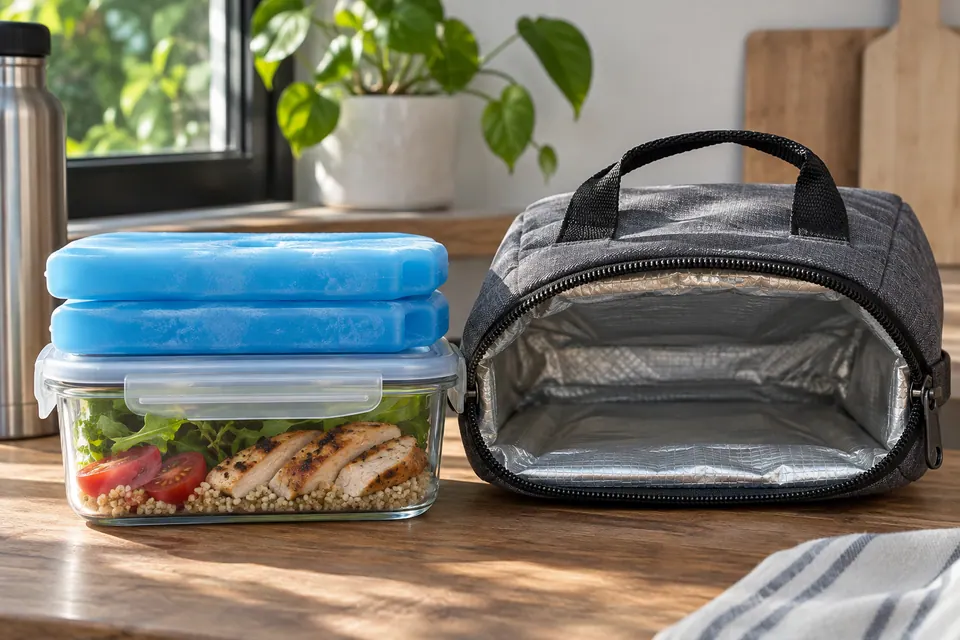
Measure the lunch container with its lid and clips closed, add the ice packs you actually carry, and compare that arrangement with the bag’s interior and opening. A larger capacity label can still leave you with the wrong shape or an awkward stack.
This checklist is for the practical commute question: can everything travel in the intended orientation, and can you retrieve lunch without emptying the whole bag? It does not test insulation or establish a food-storage time.
Start with the packed arrangement
Put your empty, clean container, ice packs, cutlery and any separate drink container on a table. Arrange them as you intend to carry them. Record the outside width, depth and height of this complete arrangement; include projections such as clips and bottle caps.
Keep the container upright if that is how its instructions require it to travel. A diagonal or sideways arrangement is useful only if it is permitted and practical with the contents you carry. Do not count the ability to force the zipper shut as a successful fit.
| Record | What it resolves |
|---|---|
| Closed container’s maximum outside dimensions | Whether the lid or clips occupy space beyond the bowl |
| Ice-pack dimensions and intended position | Whether the remaining height or width is still usable |
| Bag’s interior width, depth and height | Whether the proposed stack fits on paper |
| Opening width and lid clearance | Whether the container can pass through the opening upright |
| Space needed to grip and lift the container | Whether you can remove lunch without unloading other items |
If a seller provides only exterior dimensions, mark interior fit as unknown. Ask for the missing measurements rather than subtracting an assumed insulation thickness.
Use exact-model numbers as a preliminary screen
For a concrete example, the Bentgo Glass Salad Container U.S. listing checked on November 8, 2026 gives a size of 7.6 × 7 × 4 inches. Its 7.6-cup capacity is a separate measurement; cups cannot tell you the width of a bag opening.
The Canadian listing for the YETI Daytrip 9L Insulated Box, checked the same day, gives interior dimensions of 10.2 inches wide × 7.4 deep × 6.9 high. Orienting the container’s 7.6-inch side along the bag’s width leaves a nominal 2.6 inches in width, 0.4 in depth and 2.9 in height before adding anything else.
That arithmetic is a screening calculation, not a verified compatibility result. It does not account for your ice packs, the opening, corner shape, usable clearance around clips or room for your hand. We have not physically fitted these products together. In particular, the small remaining depth deserves an actual check before purchase.
Match the exact model and region when recording dimensions. Similar product names and old support pages can describe different sizes or generations. Save the product name alongside each measurement so you can resolve conflicting specifications with the seller.
Rehearse the sequence you will use at work
When you can inspect the bag, put in the clean, empty container and the actual accessories. Close the lid normally. Then reopen it in the position where you expect to eat and remove the container using its intended grip points.
Notice what must come out first. A tall stack may fit yet require you to place a drink, cutlery and ice pack on a surface you do not have. Repack until the items you need first are reachable, or choose a different layout. This trial can identify an access problem even when all the published dimensions appear sufficient.
Finally check the packed bag’s exterior against your locker, commute bag or storage space. Keep that second comparison separate from the container fit check. For a workplace without a fixed desk, the long-shift storage checklist helps you check whether that storage remains accessible throughout the day.
Make the purchase decision from the missing measurement
If the stack is too large on paper, change the bag or container before buying. If it fits on paper but the opening is undocumented, ask for that measurement or inspect the bag. If the physical trial works but retrieval is awkward, change the packing order or bag shape.
A useful final note is specific: “container fits upright with these two packs; cutlery must be removed first.” It records what you actually checked without turning a capacity label into a promise about fit or cooling.
Questions and answers
Does a nine-liter cooler bag fit every lunch container?
No. Liters describe capacity, not the shape of the usable space or the opening. Compare the closed container's outside dimensions, ice packs and other contents with the exact bag's interior dimensions, then try the complete arrangement.
Can I use the cooler bag's exterior dimensions for a fit check?
Exterior dimensions help you check a locker or the space beside your seat. They do not establish the room available inside insulation, seams and the lid. Ask for interior dimensions and opening clearance for the exact model.
Does a successful packing trial establish how long lunch stays cold?
No. This checklist tests physical fit and access only. It does not measure food temperature or establish a safe storage duration. Follow applicable food-storage guidance separately.