The 3 a.m. · process
A Bedroom Night-Sweats Change Kit: What to Keep Within Reach
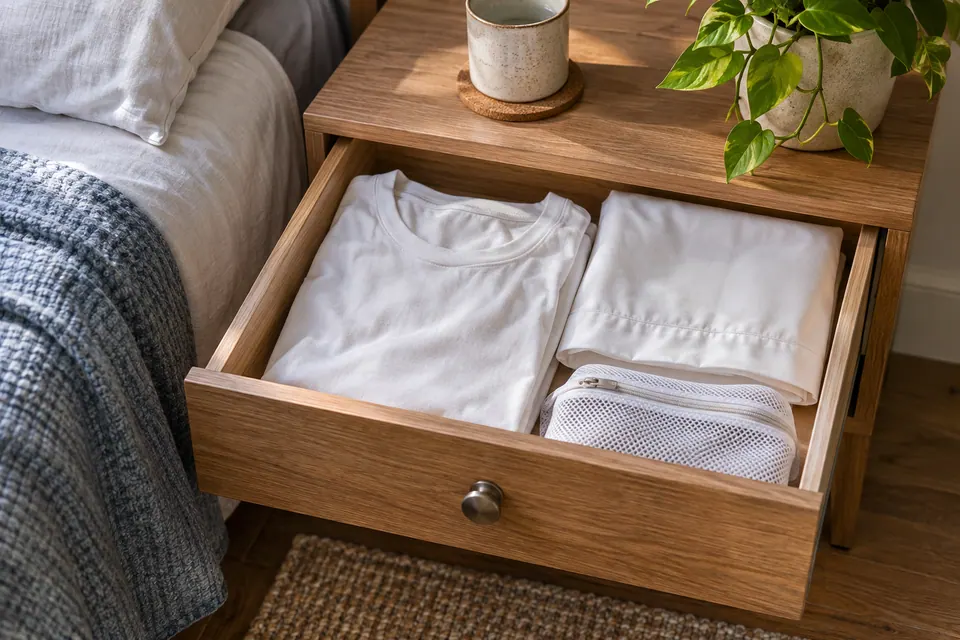
A useful night-time change kit is a small set of clean items you can find without searching. Start with what you already own. The aim is to make a change straightforward when you want one; it is not a promise of fewer awakenings or less sweating.
Choose the contents around what you actually change. Someone who wants a fresh top needs a different setup from someone who also changes a pillowcase or sheet.
Build the smallest useful setup
| Item | Include it when | Check before bedtime |
|---|---|---|
| A clean top, nightgown or sleep set | You sometimes want to change clothing | It fits comfortably and you can manage its openings |
| A spare pillowcase | You want a fresh surface for your pillow | It fits the pillow and is easy to put on |
| A small clean towel | You like having something to pat skin dry | It is separate from used laundry |
| A place for used items | You need somewhere to put the change | It is accessible and off the walking route |
| A reachable light | You need light to see what you are doing | You can operate it from where you will change |
These are practical suggestions, not a required shopping list. A drawer, shelf or small basket can hold the clean items. If you never use one of them, take it out rather than maintaining a kit for its own sake.
Put the supplies where the change will happen
Decide where you prefer to get changed: beside the bed, in the bathroom or in another room. Put the dry clothes there, or in a simple bundle you can carry. Keep clean supplies separate from damp, used items.
Try reaching for the bundle in daylight. Check whether you can open the drawer, find the neckline and handle any fastenings comfortably. If bending or stretching is awkward, choose a more accessible shelf or ask someone to help arrange it. Do not balance the supplies on a chair you need for sitting or place a basket in the route to the bathroom.
If you share the room, agree on the location and lighting. You might prefer a drawer on your side of the bed or a change in the bathroom. The useful arrangement is the one both people can navigate, rather than a promise that every change will be silent.
Plan for the larger change separately
If you sometimes change sheets, identify a clean set and where it lives. You do not have to store the whole set on the bedside table. Make sure you can find the right size without sorting through several sets while tired.
Before buying extra bedding, check the items you already have. A case or cover may have different care instructions from the pillow or bedding underneath it. If an inner item becomes wet, use its own cleaning and drying directions rather than assuming that replacing the outer layer is all it needs.
For choosing which part to replace or keep, see cooling pillowcase versus cooling pillow.
Reset the kit around your laundry schedule
After using a change, set aside time to replenish it. Move used items into your normal care routine and follow each label. The number of spares you need depends on how often you change and how soon washing and drying are possible.
If you repeatedly run out, add the item that is missing. If laundry space is limited, avoid building a large collection with care requirements you cannot manage. Our sleepwear guide can help you compare practical clothing choices.
Keep the cause separate from the setup
The NHS advises speaking with a GP when night sweating regularly wakes you or worries you. Night sweats can have different causes. Organizing a dry change can be useful while you seek advice, but it does not identify why they are happening.
Questions and answers
Do I need a special cooling kit for night sweats?
No. Start with a clean change you already find comfortable, a spare case if you use one, and somewhere separate for used laundry. Add items only when you know what is missing.
Should I keep a full spare bedding set beside the bed?
Keep the items you actually want nearby and use an accessible cupboard for larger spares. The right amount depends on what needs changing and when you can wash and dry it.
What if I share a bedroom?
Choose a place for supplies and a light you can both live with. Keep the path clear and decide where used laundry will go so you do not need to search through shared drawers at night.
When should I ask about night sweats medically?
NHS advice is to speak with a GP if night sweating regularly wakes you or worries you. A convenient change of clothes does not explain the cause of the sweating.