The 3 a.m. · process
Night Sweats Appointment Notes: What to Record Before Your Visit
A useful appointment note describes what happened, when it happened and how it affected you. Start with what you remember; an incomplete account is still something you can discuss with your clinician. Do not postpone contacting a health care professional while you collect more nights of data.
This template is for adults preparing to discuss night sweats. It is a memory aid, not a diagnostic questionnaire, and it has no score or required observation period. Copy it into your own notebook or private document. Keep completed notes for your health care team rather than submitting them to this website.
Decide about care before starting the record
The NHS advises seeing a GP if night sweats repeatedly wake you or cause concern. It also advises a consultation when night sweats occur with a very high temperature or feeling hot, cold or shivery, a cough, diarrhea, or unexplained weight loss. In the US, contact your primary care clinician and describe these concerns when arranging the visit.
Do not use a routine appointment diary during an emergency. Severe difficulty breathing or loss of consciousness needs emergency help; call 911 in the US or your local emergency number. MedlinePlus lists breathing problems and loss of consciousness among emergency warning signs. These are examples, not a complete list. Getting help comes before completing notes.
Describe an episode in ordinary words
Write what you actually noticed: damp skin, a wet neckline, soaked sleepwear, or bedding you needed to change. The NHS describes night sweats as soaking clothes and bedding despite a cool sleeping environment. You do not need to decide whether your experience meets that description before asking about it.
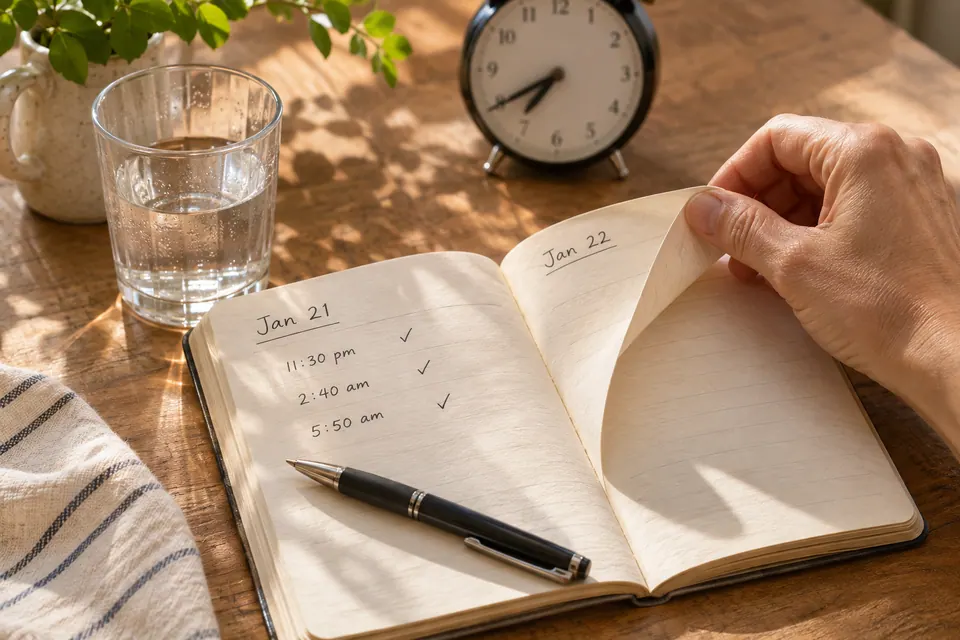
Keep the time of waking separate from how long you think the sweating lasted. If you woke at about 3 a.m., that does not tell you when it began. Write “start time unknown” when that is the honest answer.
The MedlinePlus appointment guide recommends bringing a symptom description, including when it started and what appears to make it better or worse. The table below adapts that general advice into a practical night-time note; it has not been validated as a clinical assessment tool.
| Note | Fill in what you know |
|---|---|
| Date and approximate time noticed | Date: ______; woke/noticed at: ______; exact time or estimate: ______ |
| What was wet | Skin, clothing or bedding; describe the area and amount in your own words: ______ |
| What happened next | Changed clothes/sheet, stayed awake, or another action: ______ |
| Timing you can actually recall | When you first noticed this happening: ______; episode duration, if known: ______ |
| Sleep and next-day impact | Awakenings you remember, difficulty returning to sleep, or an affected activity: ______ |
| Room and layers | Room felt warm/cool/uncertain: ______; clothing, covers, heating or fan in use: ______ |
| Other things you noticed | Other symptoms, how you felt, or a measured temperature with time and units: ______ |
| Recent changes worth mentioning | A new medicine or dose, illness, travel, routine or bedding change, with approximate date: ______ |
“Not measured,” “not sure” and “do not remember” are useful answers. The template does not require buying a thermometer, wearing a tracker or staying awake to time an episode.
Separate observations from explanations
Keep a possible connection as a question. “I changed my duvet around the same time” records a sequence; “the duvet caused this” adds a conclusion that the note cannot establish. Likewise, record a medication change without deciding it explains the sweating.
Before the visit, add a short summary: roughly when the problem began, whether you have noticed a change in frequency, and the main reason you want help. If you cannot recall every night, describe the gaps rather than converting missing entries into nights without sweating. Do not turn this into a task that makes sleep harder.
Bring your medicine list and questions
List prescription and nonprescription medicines, vitamins, herbs and supplements, plus known allergies. Include the name, dose and how you actually take each item when you know them; use the packaging or your existing list if easier. Mention recent changes and anything you are uncertain about. FDA guidance says to follow medicine directions and consult your provider before stopping; do not stop or alter one to test a theory from your notes.
Choose the questions you most want answered, such as:
- What information from this record is useful, and is anything missing?
- Do you recommend any further assessment, and what would it help clarify?
- Which changes should prompt earlier contact or emergency help?
- Who should I contact with questions, and how will I receive any results?
At the appointment, write down the agreed next step and ask for clarification or written instructions if needed. You can ask someone you trust to help take notes, or request an interpreter from the practice in advance; both are options described in the MedlinePlus appointment guide.
Keep practical comfort tasks separate from medical follow-up. The bedroom change-kit guide covers having dry items within reach, and the sleepwear guide covers clothing choices. Neither replaces discussing recurring or worrying sweating with your clinician.
Questions and answers
How many nights should I record before contacting a doctor?
There is no required recording period in this guide. Contact a clinician about recurring or worrying night sweats without waiting to fill a diary. Bring whatever you can remember, and ask whether further notes would be useful.
Do I need a thermometer or sleep tracker to make useful notes?
No device is required for this template. Describe what you noticed. If you already have a measurement, include its time and units; otherwise write not measured rather than guessing a number.
Can the notes tell me what is causing my night sweats?
No. The notes organize information for a clinical conversation. An episode occurring after a meal, a medicine change or a bedding change does not establish that it caused the sweating.
Should I send my completed notes through the Coolkeel inquiry form?
No. Keep the notes in your own paper or private digital record and share them with your health care team using their preferred channel. This template is not a website form or a clinical assessment service.