The 3 a.m. · comparison
How to Arrange Bedding When Partners Prefer Different Temperatures
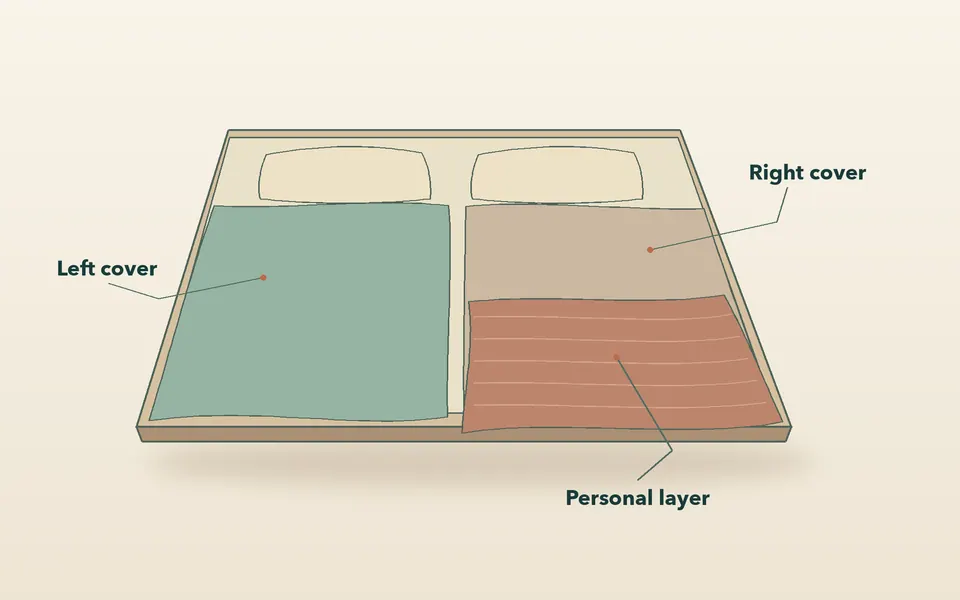
If one partner wants less covering and the other wants more, start by deciding which layers need to be shared. Try either a light shared cover with an extra layer only on one side, or separate top covers on the same bed. You do not have to replace the mattress to try either arrangement.
This is a practical comparison for two adults sharing a bed, not a promise of better sleep or fewer night sweats. IKEA’s duvet guide describes individual duvets as an option for different warmth and space preferences. That is retailer guidance; the checks below are editorial suggestions, not a tested prescription.
Choose the simplest arrangement to try
Before shopping, each person should name the immediate problem: wanting less cover, wanting more, losing coverage when someone turns, or finding the covers awkward to move. Different problems call for different adjustments.
| Arrangement | Consider it when | Check together |
|---|---|---|
| Light shared cover, plus a personal blanket | You like sharing a cover, but one person wants another layer | Can the extra layer stay on that person’s side without being pulled across both of you? |
| Separate blankets or covered duvets | You want to add, remove or change your top covers independently | Does each person have enough coverage when turning, without a pile of excess fabric between you? |
Use suitable items you already own for a first try. There is no need to buy a matching pair: one person could prefer a sheet and light blanket while the other prefers a covered duvet. Start with each person’s current preference, rather than assigning a particular material to the warmer or cooler sleeper.
Draw the layers from the mattress upward
Write down what lies underneath both people and what lies over each person. For example:
- Shared underneath: mattress, existing protector if used, fitted sheet.
- Person A: chosen top sheet or cover.
- Person B: their chosen cover, with an extra layer if wanted.
Include any shared top sheet or bedspread in the sketch. If you want independent adjustment, try folding back one side: does a shared layer still pull on the other person’s bedding? Decide whether to keep it, replace it with separate top sheets, or leave it off when sleeping. There is no required top-sheet rule.
A decorative bedspread can be put aside at bedtime if it gets in the way of the arrangement. Keep it somewhere that does not obstruct getting out of bed.
Check fit before choosing a size
Do not assume a particular single or twin size will suit both people. Check the actual dimensions of the blanket or duvet and, where needed, its matching cover.
With bedding you can try, lie in your normal positions and turn over. Check these points on both sides:
- Can you cover your shoulders and feet without borrowing the other person’s cover?
- Does the inner edge leave an unwanted gap, or does overlapping it create an awkward bundle?
- Can you push the cover aside, sit up and get out comfortably?
- If you want to move closer together, can you rearrange the edges without trapping or pulling either cover?
When buying online, check whether opening, trying or washing the item affects returns before relying on a home trial. Follow the individual item’s care instructions; two smaller items do not automatically mean an easier laundry routine. Consider how you will wash, dry and store both sets.
Agree on the shared room separately
Separate top covers do not provide separate room-temperature controls. Agree before changing the thermostat, opening a window or directing a fan across the bed. If the disagreement is about the room itself, name that separately rather than expecting a new duvet arrangement to settle it.
Try one bedding arrangement at a time. Note practical problems such as a slipping cover, an awkward center edge or difficult washing, then adjust the part involved. Use that experience to choose your setup, not to claim that a material has changed the cause of sweating.
If you need spare clothing or linen nearby, the bedroom change-kit guide covers that separate task. For garment choices, see the sleepwear guide.
The NHS advises speaking with a GP about night sweating that regularly wakes you or worries you, including regularly waking with soaked sheets. Choosing different covers does not establish why the sweating happens.
Questions and answers
Do we need separate beds to use different bedding?
No. You can keep the shared bed and fitted sheet while trying separate top covers, or keep a light shared cover and add a personal layer on one side. Check whether both people can adjust comfortably.
Should we buy two twin duvets for a shared bed?
Do not choose by the twin label alone. Check each item's actual dimensions and cover compatibility, then consider coverage when you turn, excess fabric at the center and how easily you can move it.
Can we keep a shared top sheet with separate duvets?
Yes, if you both want one. Try pulling back one duvet and rolling over: if the shared sheet still pulls across the other person, consider separate top sheets or covered duvets without a shared top sheet.
Can separate covers explain why I have night sweats?
This guide provides no evidence that separate covers change night-sweat frequency or cause. They are an arrangement to try for different covering preferences. Speak with a clinician about recurring or worrying night sweats.