Away · process
Sun Hat Fit: Check the Size Chart and Crown Before Sizing Up
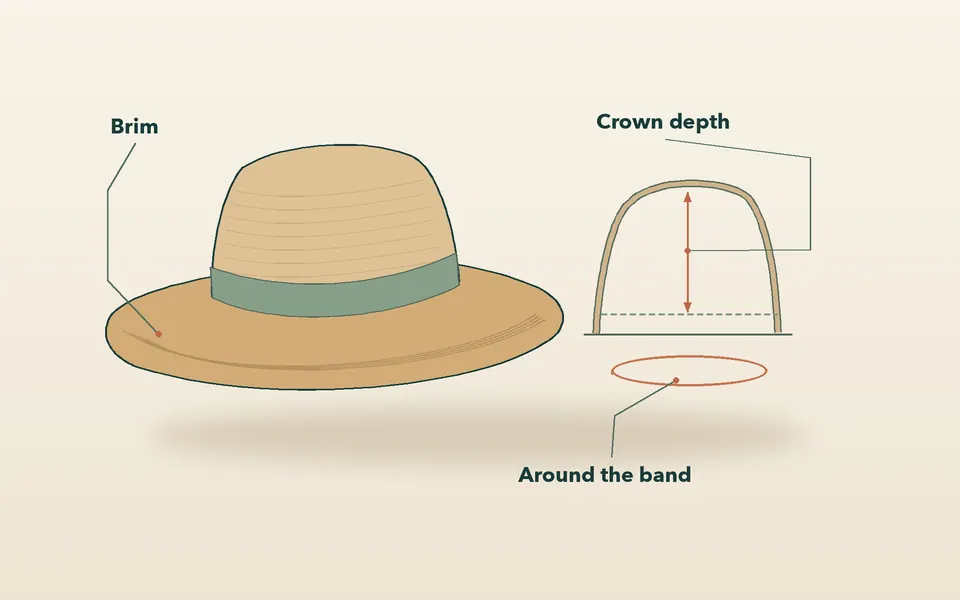
Before sizing up a sun hat, separate three questions: does its sizing method match your measurement, does the band fit, and does the crown let the hat sit where you want it? A bigger number may change the space around the band without resolving where the hat touches your ears or how the brim sits over your glasses.
Start with the exact style and its current size chart. Keep your original head measurement alongside any allowance the manufacturer tells you to use. Then check the hat’s position as a separate fitting task. This guide covers sizing and physical fit; it does not rank hats by cooling or sun-protection performance. Coolkeel has not worn or tested the examples below.
Keep the measurement and the size label in separate fields
Write down the brand, model, regional store and unit before comparing hats. A label such as medium, a numerical hat size and a measurement in centimetres are different entries in your notes. Do not replace the measurement with the label from an old baseball cap and assume another style uses it identically.
Use the measuring position specified by the maker. For example, Tilley’s The Right Fit guide places the measuring line above the ears and brow, then applies a comfort allowance before consulting its chart. That is a specific sequence. If you already used its allowance, adding another one from a forum answer would change the input again.
A useful record is:
| Field | What to write down |
|---|---|
| Unadjusted measurement | The reading and unit before any added allowance |
| Measuring method | Where the maker says to place the tape or string |
| Allowance | The exact instruction followed, or none specified |
| Chart input | The value you actually looked up |
| Selected label | The size shown for the particular style |
| Source | Product page, regional store and date checked |
If the product’s instructions and a general brand guide seem inconsistent, keep both links and ask which applies to that style. Do not average two answers or silently substitute a retailer’s conversion.
Read the row labels before comparing numbers
The official US pages below were checked on November 11, 2026, including their opened Size Chart panels. They illustrate two kinds of information a buyer can encounter.
The T4MO-1 Airflo Hikers Hat panel presents hat labels, numerical sizes and corresponding measurements. Its product specifications separately list a side crown height. The chart is a starting point for selecting a label; it is not a complete map of how every part of the hat will contact your head.
The T3 Wanderer panel names sweatband circumference, crown height, and brim widths at the front, back and sides. These are product dimensions. In its inch view, sizes 7 1/4 and 7 3/8 have different listed sweatband circumferences but the same listed 4-inch crown height. In this example, moving to the adjacent label does not mean a taller published crown.
Do not turn that example into a rule for all Tilley hats. Also, a general “crown height” row and another model’s “side crown height” may use different measurement points. Unless the maker defines both, comparing the numbers as though they were identical measurements adds uncertainty rather than removing it.
When a table contains an unexpected value, ask for clarification. Do not repair the manufacturer’s chart yourself or buy on the assumption that a missing dimension must match another style.
Check the band, crown and nearby items separately
If you can try the hat, use the maker’s intended wearing position and fit guidance. Keep the hairstyle and glasses you expect to wear with it consistent while comparing options. The purpose is to identify the contact point, not to produce a medical fit assessment.
Record specific observations instead of only “too big” or “too small”:
| Observation | The question it leaves to resolve |
|---|---|
| Pressure concentrated around the band | Is the chosen circumference or this style’s fit unsuitable? |
| Room around the band, but contact with the ears | Is the hat sitting too low for the crown/shape you need? |
| Brim catches the glasses frame | Does the brim shape or wearing position interfere with your glasses? |
| Hat shifts when you turn your head | Does the maker’s intended fit and retention arrangement suit this use? |
| Top of the head contacts the inside crown | Is there enough usable depth in this style at the intended position? |
These observations do not identify a guaranteed next size. For instance, tightening an adjustment may change the opening without changing the construction above it. Likewise, using a retention cord does not prove that the band or crown fits. Follow the maker’s directions for any supplied adjustment or cord; avoid improvised alterations while deciding whether to keep the hat.
Decide what information is missing before another order
Choose one of three next steps:
- The measurement step is unclear: repeat the maker’s measurement procedure and record the unadjusted value. Resolve the allowance before choosing a label.
- The chart gives the needed dimensions, but the hat sits poorly: ask about a different size or style using the contact points you recorded. Do not assume a larger label fixes crown depth.
- The relevant dimension is absent or ambiguous: ask the manufacturer for the measurement method and the dimension for the exact size you are considering.
A specific question is easier to answer: “I measured ___ using your ___ guide and selected ___ in model ___. The band feels ___, but the hat touches ___ when worn as directed. Would a different size change that dimension, or should I compare another style?”
Before committing to a purchase or altering a delivered item, read the seller’s current return conditions. The comfort-accessory return checklist helps you identify what must be checked without assuming a universal return period. For a separate carried-shade decision, the walking umbrella packing checklist addresses transport and handling rather than hat fit.
Questions and answers
Will the same numbered size fit the same in two sun hat styles?
The number alone does not establish how the hat will sit. Read each style's chart and check whether it describes head measurement, sweatband circumference or other product dimensions. Then compare the position of the band, crown and brim on your head.
Does going up one size always make the crown taller?
No universal relationship should be assumed. The T3 Wanderer chart reviewed here lists the same 4-inch crown height for sizes 7 1/4 and 7 3/8, while their listed sweatband circumferences differ. Other styles need their own measurements.
Should I add 2 cm to my head measurement for every hat?
No. Follow the instructions attached to the exact brand and style. Tilley's separate The Right Fit guide uses an allowance before chart lookup; that is not a universal hat rule. Keep your unadjusted measurement so you do not unknowingly add an allowance twice.
What if a hat is loose but also sits on my ears?
Record those as two observations: room around the band and the position of the hat on your head. A smaller or larger label is not enough to predict both outcomes. Ask the maker about the specific crown and fit before ordering another size.